
Master the Classics: Chess & Scrabble Rules
Delve into the timeless strategies of Chess and the wordplay wonders of Scrabble. Discover the rules that govern these iconic games and elevate your gameplay.

Chess Game Essentials
Chess is a strategic board game played on an 8x8 grid. Each player commands 16 pieces: one king, one queen, two rooks, two knights, two bishops, and eight pawns. The objective is to checkmate your opponent's king, meaning it is under threat of capture with no legal moves to escape.
Pieces move uniquely: pawns advance forward but capture diagonally, knights leap in an 'L' shape, bishops glide diagonally, rooks move in straight lines, the queen combines the power of rooks and bishops, and the king moves one square in any direction. Mastery involves strategic positioning, controlling the center, and anticipating your opponent's moves.
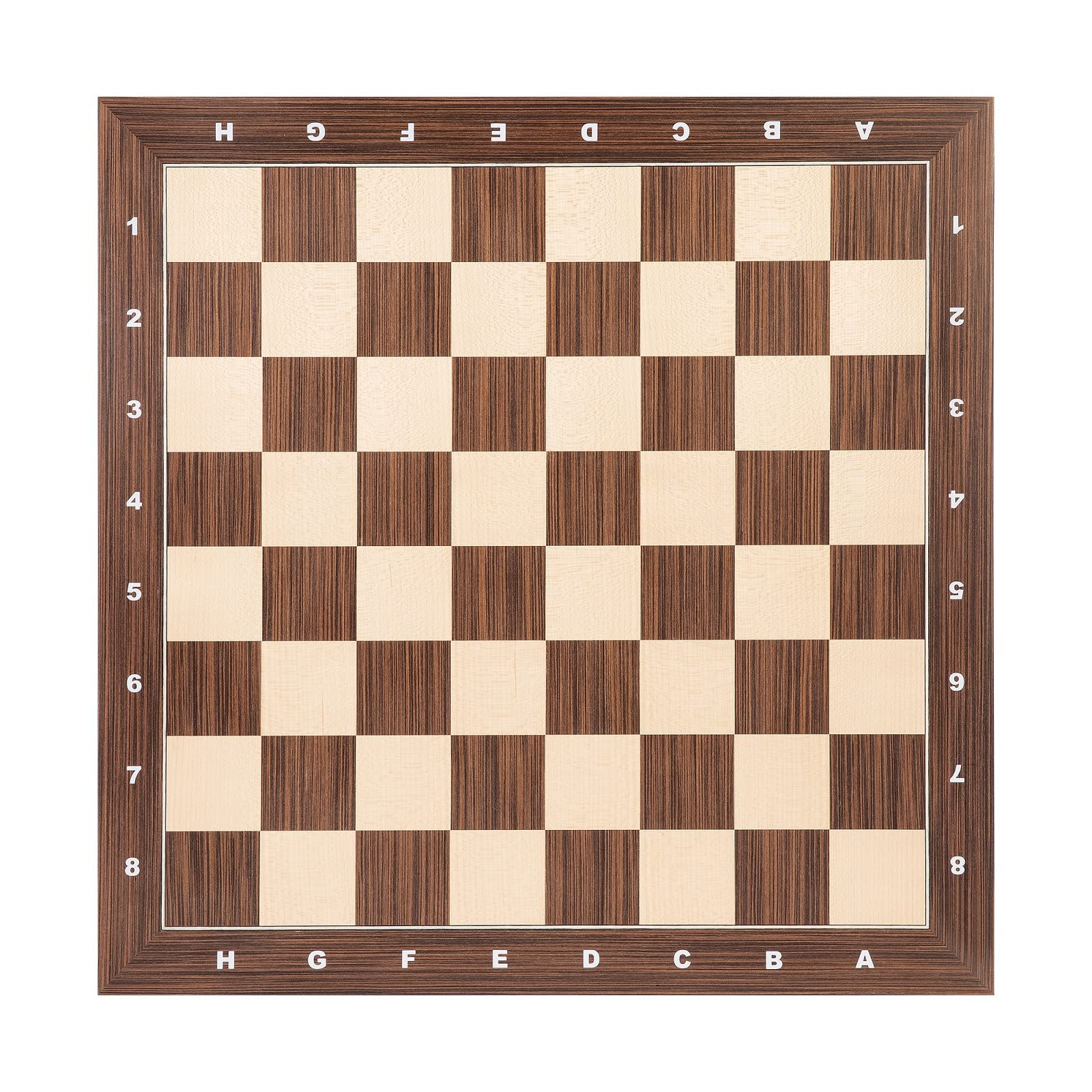
Chess Board Setup
The game of Chess is played on a chessboard. The chessboard is a square board divided into a grid of 64 squares (8-by-8) of alternating color. On the chessboard, the lighter-colored squares are called "light" or "white", and the darker-colored squares are called "dark" or "black". Sixteen pieces each of the white and black are placed on the board at the beginning of the game. The chessboard should be rightly placed, so that a white square is in each players's right corner. In the right placement, the horizontal rows are called ranks while the vertical columns are called files.

Piece Placement
- Rooks are placed on the right and left edge, the outside corners.
- Knights are placed immediately inside of the rooks.
- Bishops are placed immediately inside of the knights.
- The queen is placed on the central square of the same color of that of the piece; white queen on the white square and black queen on the black square.
- The king is placed in the vacant spot next to the queen.
- The Pawns are placed one square in front of all of the other pieces.

Rules of Gameplay
- The player with the white piece makes the first move. Then players alternate moves.
- There is no official standard for who takes the white piece. It can be done through an agreed means at the point of play.
- Making moves is required until a king is checkmated, a draw is declared or a player resigns.
- When the game is time controlled, a players losses the game if they exceed the time limit to make a move, except if they cannot be checkmated.

Draws In Chess Game
- The game ends in a draw if the player to move is not in check and has no legal move. This is called a stalemate.
- The game can end in a draw if the game reaches a dead position.
- A draw is also possible when both players agree to a draw after one of the players makes the offer.
Scrabble Game Guidelines
Unleash Your Word Power
Scrabble is a word game where players score points by placing tiles, each bearing a single letter, onto a game board divided into a 15x15 grid. The goal is to create words in crossword fashion, utilizing premium squares for double or triple letter and word scores. Each player draws seven tiles and replenishes their rack after each turn.
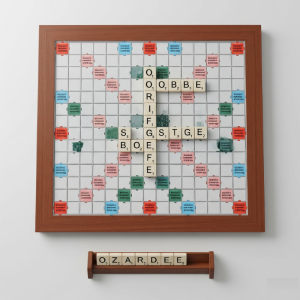
Before Gameplay
- A dictionary or word list should be selected in order to adjucate any challenges during gameplay.
- For a tournament the wordlist is decided and specifed in advance.
- All tiles are placed inside the scrabble bag or an opaque bag.
- A player is selected to go first by both drawing a tile and the player with the letter closer to the letter A plays first.
- Blanks supersede the letter A in selecting the first player.
- Thereafter each player draws seven tiles and places them on their racks hidden from the other players.
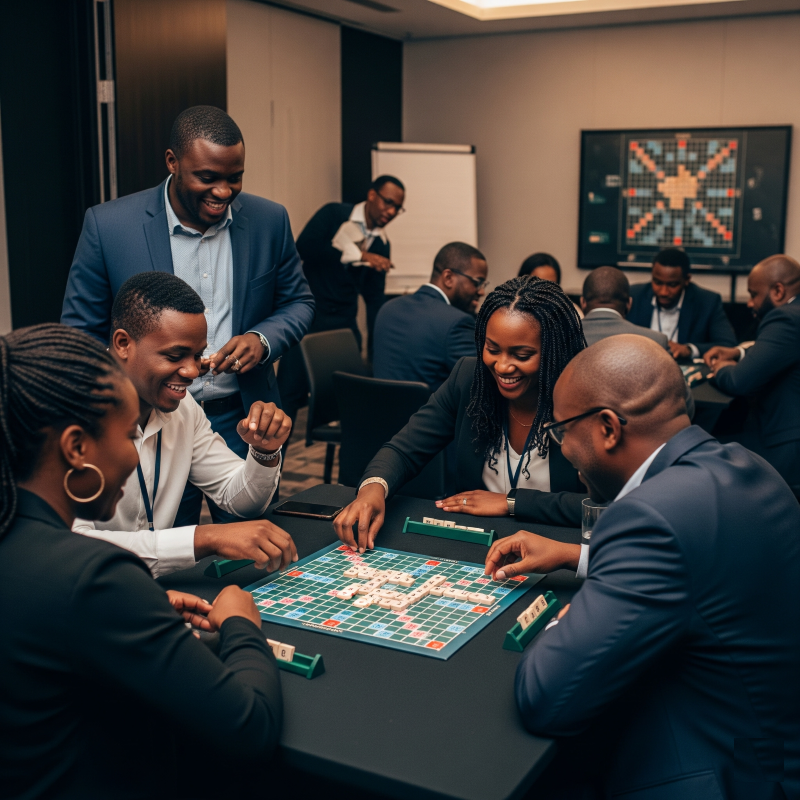
Acceptable Words
- Words of length 2-15 along with their inflected forms and plurals, that appear on the agreed dictionary are acceptable words.
- Acronyms and abbreviations are generally not allowed unless they have seperate entries for example AWOL.
- Foreign words are generally not allowed except they have been incorporated into the English language.
- A player is selected to go first by both drawing a tile and the player with the letter closer to the letter A plays first.
- Words that contain apostrophes, are hyphenated or capitalized (such as proper nouns) are generally not allowed unless they also appear as acceptable entries.
- Vulgar and offencive words are generally excluded from the official scrabble players dictionary but allowed in club and tournament play.
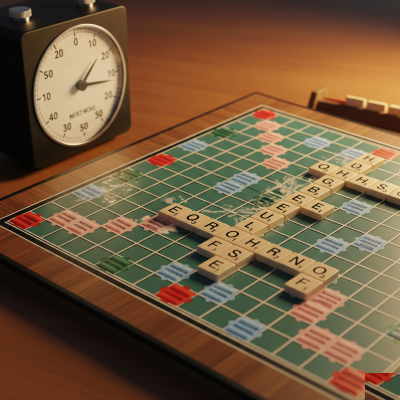
Tournament Play
- The rules of tournament scrabble somewhat differ from that of casual play.
- All tournament games are played with a game clock and set time control and only between two players or occasionally two teams of players.
- A player doesn't automatically lose the game if they go overtime like in chess but is assessed a 10 piont penalty per minute.
- The original wooden tiles are not allowed in tournament rather plastic tiles are often used.
Game Play
- The first play of the game must consist of at least 2 tiles and cover the center square (H8).
- Thereafter any play must consist of at least one of the player's tiles to form a main word, reading left-to-right or top-to-bottom.
- Diagonal plays are not allowed at least one tile must be adjacent horizontally or vertically to a tile already on the board.
- On every turn the player at the turn can perform: (a) pass; forfeiting the turn and scoring zero. (b) exchange one or more tiles for an equal number from the bag, scoring zero. This is can be done if only there are 7 or more tiles left in the bag. (c) play at least one tile on the board, adding the value of all words formed to the player's cummulative score.
End of Game
- The game ends when one player has played every tile on their rack and there is no tile left in the bag.
- If at least 6 successive scoreless turns have occured and either player decides to play the game.
- In tournament play, when either player exceeds 10 minutes of overtime. At the end of the game, each player's score is reduced by the sum of the values of their unplayed tiles; if a player plays out, the sum of all other players' unplayed tiles is added to that player's score. This rule differs slightly in most tournaments; a player who plays out adds twice this sum, and the opponent's score is unchanged.